Nursing Home Abuse and Neglect
As our loved ones get older, it is inevitable that we may be faced with the decision to place them in a nursing home. This is never an easy decision, but nursing home care can provide many residents with a quality of life they cannot get elsewhere. We look to nursing homes to ensure the safety and comfort of our family members, and to treat them with the love and respect that we would ourselves hope to receive. The unfortunate truth is that many times this is not the case. Nursing home abuse is a real concern.
There are currently more than 3 million adults living in nursing homes. An estimated 40% of all adults will enter a nursing home at some point – some for rehabilitation, some temporary, and some permanent residents. As the aging population expands, these numbers are only going to rise. While many nursing home residents are well cared for, there are far too many residents who do not get the care and love that they need and deserve.
With more than 16,000 licensed nursing homes in the United States, the number of incidents involving neglect or nursing home abuse by nursing home employees is alarming. Based on a congressional report, 1 in 3 people were abused in nursing homes in a short two-year study period. These are statistics based on the cases that are reported.
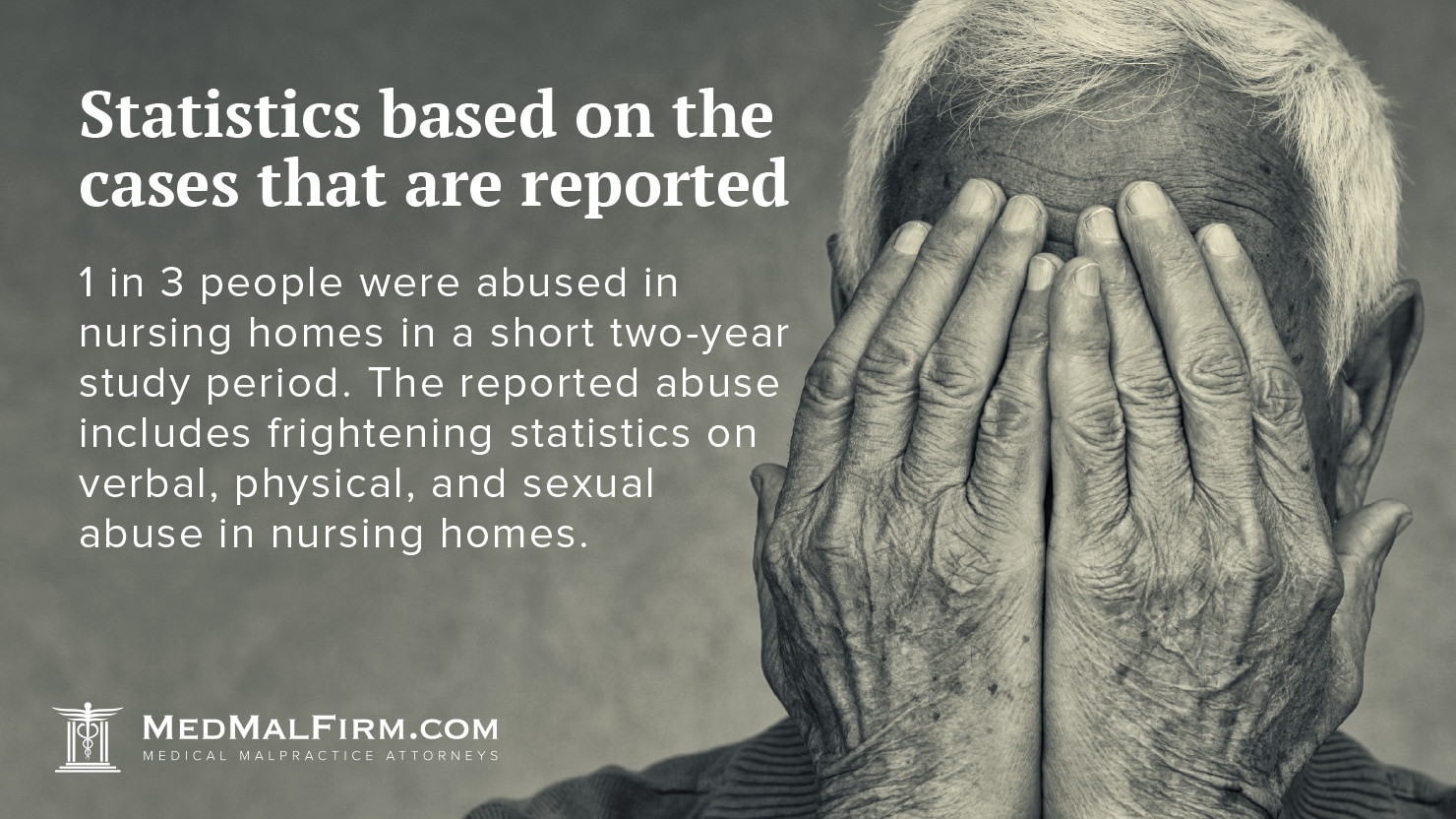
Experts generally agree that for every case of nursing home abuse that is reported, at least five more are not.
What is Nursing Home Abuse?
The term “abuse” tends to make people think of physical violence. While that can certainly be the case, nursing home abuse involves much more than physical abuse. Nursing home abuse may include a variety of actions or inactions that cause harm to residents. It is important that caregivers and loved ones be aware of abuse and neglect, and signs that it may be occurring.
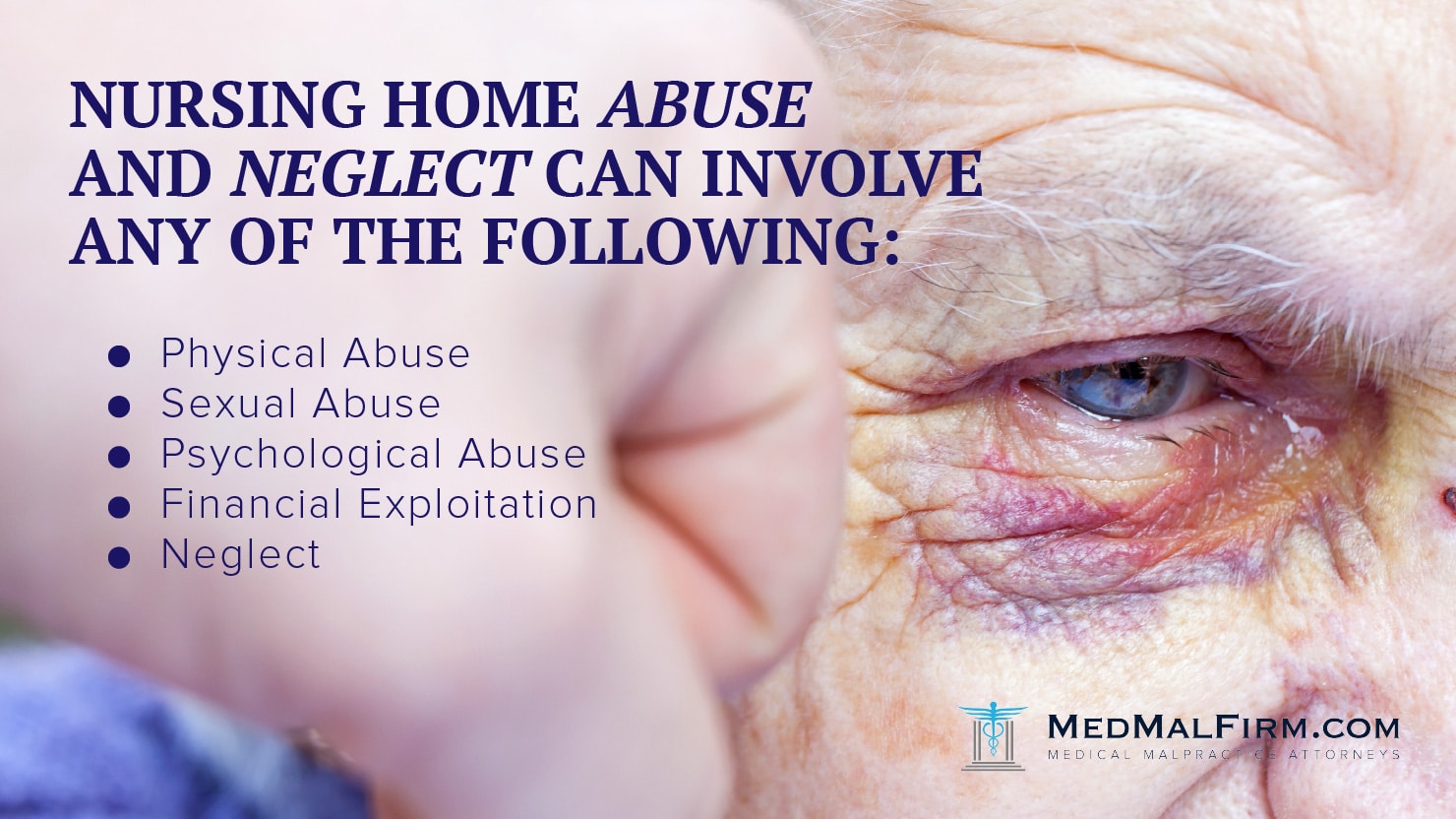
Physical Abuse
Physical nursing home abuse includes any type of abuse that causes physical harm. This type of abuse may include hitting, slapping, pinching, pushing, kicking, use of restraints, or lack of physical care. Physical abuse can include forcibly restraining a patient by using medication or using physical restraints. This is unfortunately common among patients with dementia or Alzheimer’s disease who are deemed “unruly” or “difficult”. Abuse can occur at the hands of nursing home staff, other residents, or caregivers.
Sexual Abuse
Sexual nursing home abuse includes any unwanted sexual advances or activities. This includes sexual advances made by nursing home staff, other residents, or other visitors. Sexual assault or abuse is a significant concern among patients who have cognitive disorders or who have dementia and cannot understand or express consent. Often, these patients are unsure of what has happened and that they need to report any such activities.
Psychological Abuse
Psychological nursing home abuse is any sort of action that threatens, demeans, or causes harm to the resident. Yelling, humiliating, criticizing, shaming, or laughing at the patient can all be psychologically damaging. Patients who are experiencing psychological abuse often have sudden changes in their mood or behavior. Nursing home abuse causes long-term psychological and emotional suffering on residents, as well. It is not limited to the duration of the abuse.
Financial Exploitation
Financial exploitation occurs when a caregiver who has access to the resident’s finances takes advantage of the situation. This can result in stealing cash, writing checks, or making fraudulent changes on financial accounts. Financial exploitation can also occur if a caregiver or other resident steals property or cash, applies for credit in the resident’s name, or attempts to withdraw money from a bank.
Neglect
Neglect occurs when nursing home residents are not being properly taken care of. Examples of neglect include ignoring personal hygiene, neglecting basic needs like food or water, allowing residents to wander unattended, and not providing adequate medical care. Nursing home staff are required to provide basic needs and additional services to residents. Failure to do so is neglect.
What Are the Signs of Nursing Home Abuse?
Nursing home abuse can manifest in many different ways. Sometimes the signs of nursing home abuse are missed simply because we assume those we entrust to care for our loved ones are doing just that. Other times, the signs of nursing home abuse are missed because the resident doesn’t report it and hides what they are going through. And there are also cases where the resident simply doesn’t have enough regular visitors for signs of abuse or neglect to be apparent.
Some signs of nursing home abuse and neglect to be aware of include:
Signs of Physical Abuse
Signs of physical nursing home abuse are often readily apparent, such as cuts, bruises, burns, or fractures. Many others are less apparent and may be written off by the resident as an accident. Caregivers and family members should be mindful of symptoms like dehydration, malnutrition, fatigue, dental injuries, infections, or unexplained weight loss. These signs of abuse should never be ignored.
Signs of Sexual Abuse
Sexual nursing home abuse may be more difficult to detect, and the victim may be ashamed and afraid. They may not openly talk about their situation or ask for help. For families and caregivers, be aware of signs of sexual abuse, such as bruises or injuries around the genitals, unexplained sexually-transmitted diseases (STDs), or signs of inappropriate contact with staff.
Signs of Psychological Abuse
Psychological or emotional nursing home abuse is a bit more difficult to notice since there may be few physical signs. However, evidence of emotional abuse will, in many cases, manifest through behavioral changes. You may see nursing home residents exhibit childlike behavior, unexplained listlessness, or a sudden emotional withdrawal from friends and family. Anxiety and depression are common among abuse victims, as is substance abuse and suicidal ideation.
Signs of Financial Exploitation
If you are regularly involved in your loved one’s life, you will likely notice any suspicious changes in their financial situation. If you notice any changes to their bank accounts, power of attorney, credit cards, or spending habits, it is time to contact an attorney. You should have professionals help sort out suspicious or unexplained changes and ensure that your loved one’s funds are secure.
Signs of Neglect
Neglect will be mostly identifiable by the environment your loved one is living in. Signs include poor hygiene, dirty or soiled clothing or bedding, strong odor of human waste, infections, and bedsores or pressure ulcers. Abuse and neglect often go hand-in-hand, so be mindful of possible signs of both. Nursing home residents should be safe and as comfortable as possible.
What Should I Do if I Suspect Nursing Home Abuse?
If you suspect nursing home abuse, the first thing you need to do is talk to someone about your concerns. There are many organizations and websites, such as NursingHomeAbuseCenter.org, that offer helpful information about your rights and the options you may have to protect your loved one and their rights. Nursing home abuse and neglect are never acceptable. A nursing home should be a place of rest, comfort, and peace.
The truth is, we never want to think about someone causing harm to our loved ones, and nursing home abuse and neglect is far more common than any study can show. Recognizing the signs of nursing home abuse is the first step. Reporting the abuse can be a scary thing, so it is important that you find a compassionate team to help you understand what to do and what your rights are.
Get Legal Help with Nursing Home Abuse Concerns
Nursing home residents deserve every ounce of dignity and support that we, as advocates and loved ones, can provide. The team at MedMalFirm.com has dedicated their lives to being advocates for victims of nursing home abuse. With more than 20 years of experience helping families pursue justice in nursing home abuse cases, we have the knowledge and the passion it takes to hold nursing homes and their employees accountable.
To find out how we can advise you on your nursing home abuse concerns, contact our office today. We will provide you a free legal case review at no obligation.

Meagan Cline is a professional legal researcher and writer. She works alongside the team at MedMalFirm.com to provide readers with up-to-date information relevant to the healthcare and legal industries.